Good lip work should be almost invisible. You notice a fresher smile, a prettier Cupid’s bow, more balance between upper and lower lip, and better definition at the border. What you should not notice is the filler itself. Getting there requires more than a syringe and a steady hand. The choice of lip filler brand matters, the style and mapping matter even more, and the technique ties it all together. I have treated lips that needed a whisper of hydration and lips that needed architectural support after years of volume loss. The right plan depends on anatomy, goals, and tolerance for swelling, downtime, and budget.
This guide compares modern lip filler options in a practical way, grounded in what actually works in clinic. If you are seeking subtle lip enhancement, a fuller pout, improved symmetry, or correction after a past overfill, you will find the trade-offs spelled out here.
How HA fillers behave in lips
Nearly all contemporary lip augmentation injections rely on hyaluronic acid, or HA lip filler. Hyaluronic acid is a sugar molecule that binds water, which is why hydrating lip injections can soften fine lines, plump the mucosa, and improve texture. Not all HA products feel or perform the same. Manufacturers tune three main variables.
First, crosslinking density and pattern. More crosslinking typically means a firmer gel that resists movement and lasts longer, useful for structure and definition. Less crosslinking leans toward softness and spread, useful for lip hydration filler and fine line smoothing.
Second, rheology. We look at G’ (elasticity or stiffness), cohesivity, and viscosity. A higher G’ gel holds shape, so it excels for vermillion border filler, philtral column accent, and Cupid’s bow filler. A lower G’ gel moves with expression, ideal for full lip enhancement without looking wooden.
Third, particle size or whether the gel is monophasic. Particulate gels (like many classic Juvederm) may feel bouncy and can draw more water, good for plump lips treatment but sometimes prone to more swelling. Monophasic, highly cohesive gels (like some Restylane or Belotero options) integrate smoothly and can look natural even at rest and in motion.
HA’s biggest advantage is reversibility. If you dislike the result, hyaluronidase can dissolve HA lip filler. That safety net has helped patients feel confident about trying subtle lip filler and beginner lip filler plans.
Brands you will hear about, and what they do best
I am brand agnostic. I select based on rheology and tissue behavior rather than the logo on the box. Still, certain families shine in specific roles. The following patterns reflect common use in North America and Europe. Availability varies by country, and new releases appear regularly.
Restylane family. Restylane Kysse blends flexibility with structure and integrates well in dynamic lips. It often gives balanced lip filler results with less stiffness when smiling. Restylane Refyne and Defyne differ in flexibility; Refyne sits softer, Defyne offers more support along cutaneous lines. Classic Restylane (non-XpresHAn) has long served for lip border enhancement and precise shaping.
Juvederm collection. Volbella is a go-to for lip hydration filler and vertical lip lines filler due to its smoothness and subtlety. It is gentle for first-time lip filler where avoiding swelling matters. Vollure or Ultra can provide volume enhancement; Ultra is more hydrophilic and may create a juicier look if that is the goal. Volift (where available) sits between, offering shape with a natural finish.
Belotero. Belotero Balance integrates extremely well for surface smoothing, smoker lines filler, and perioral filler around the lip border. In appropriate cases, it handles lip contouring without leaving palpable lumps. It is not a workhorse for dramatic lip volume enhancement but excels in finesse work and lip smoothing injections.
Teoxane RHA. The RHA line was Homepage designed for dynamic areas. RHA 2 and 3 can achieve natural-looking lip filler effects that flex with speech and laughter. In my hands, RHA is useful for lip definition treatment that must look convincing up close and on camera.
Revanesse Versa and others. Versa has a reputation for predictable swelling and clean integration. It can suit lip filler for symmetry and subtle lip enhancement. Some clinics prefer its handling for micro-droplet placement and touch-ups.
Each family offers several gels. The best lip filler type is not universal; it is the one matched to your tissue, movement, and goals.
Styles, shapes, and the artistry of proportion
Lip filler styles get labeled by social media trends. In practice, I map lips in zones and choose a style that fits the face. A few common approaches illustrate how technique changes outcome.
Soft hydration. For patients who want smoother texture, a little sheen, and better lipstick laydown without a bigger mouth, I use low-volume micro-droplet lip filler mapping with a soft HA. Think 0.4 to 0.8 mL spread across the vermillion body and philtral columns, often combined with lip border enhancement only where border definition is weak. The result reads as lip rejuvenation, not enlargement.
Balanced enhancement. This is the most requested lip filler treatment for everyday life: a restrained increase in height and projection with improved Cupid’s bow. I might use 0.7 to 1.2 mL, favor a gel with medium G’ for structure at the peaks, and a softer gel for the body. We maintain harmony with the lower third of the face and keep the lower lip slightly fuller than the upper for a natural ratio.
Russian lip technique. The Russian lip filler approach focuses on vertical lift, accenting the Cupid’s bow and reducing projection to avoid a ducky profile. It often uses tiny microcolumns deposited from the vermillion border inward. Done well, it sharpens the center peaks and flattens the tubercles for a crisp front view. Done poorly, it can stiffen the lip or cause migration above the border. It suits patients with a good white roll and thick mucosa who want a sculpted, heart-shaped lip. Not every lip can or should be styled this way.
Korean and keyhole looks. Korean lip filler often aims for a youthful, hydrated, gradient volume with gentle central fullness and smooth edges, avoiding harsh borders. The keyhole lips technique preserves a narrow central gap for a “ribbon” of light. Both require minimal product and careful lip shaping so the effect reads airy, not overdone. These work best on patients with defined philtral columns and flexible tissue.
Structural correction. For asymmetry, Orlando, FL lip filler uneven lips, and lip filler for structure in aging mouths, the plan shifts from volume to scaffolding. Short linear threads at the vermillion border, Cupid’s bow filler for symmetry, and support for the oral commissures can transform the entire mouth. Volume comes last, if at all, to avoid heaviness.
Filler placement, cannula vs needle, and why your injector’s map matters
I draw the lip in quadrants and subunits. The upper lip has a central pout and two lateral segments, each with its own mobility and thickness. The lower lip often has three lobes. A precise map reduces the risk of tubercles, sausaging, or asymmetric smiles.
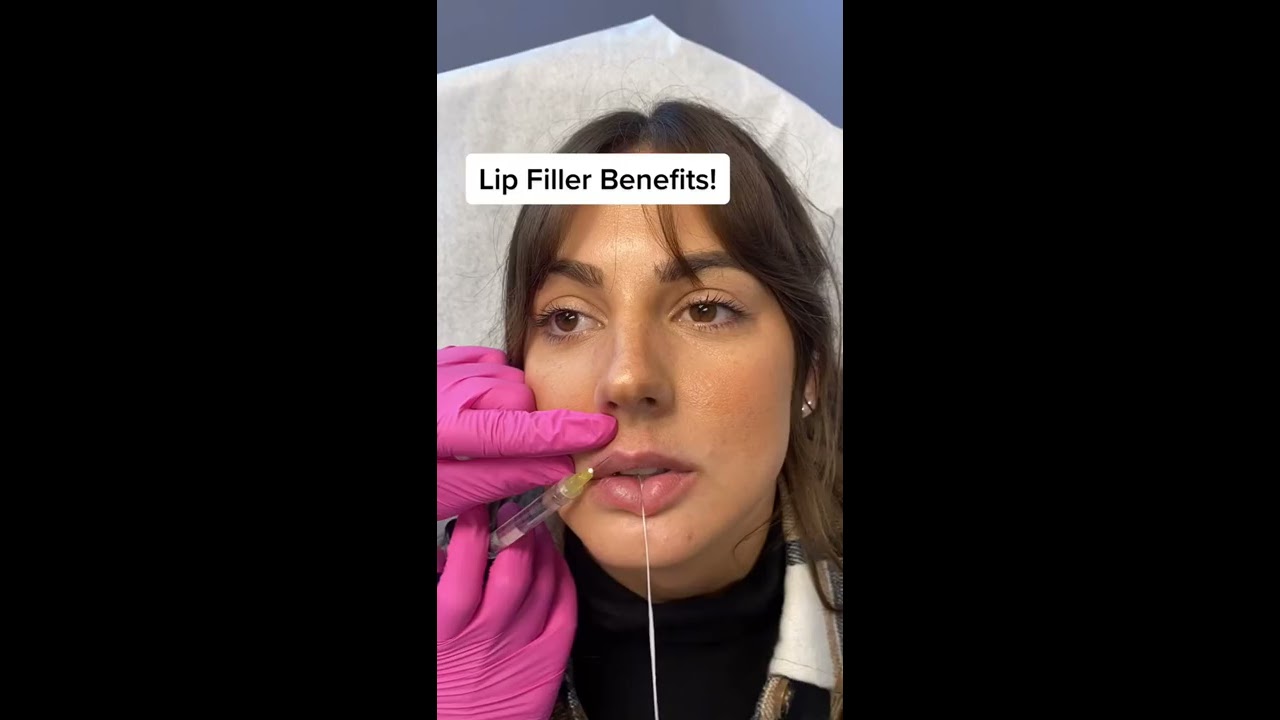
Needles give surgical-level precision for vermillion border filler and Cupid’s bow points. Cannulas reduce bruising and can glide under the mucosa to place smooth threads for volume with fewer entry sites. Both are safe lip filler tools in skilled hands. I often mix, using a needle for structural points and a cannula for the bulk of the body, especially in patients prone to bruising.
Micro-droplet lip filler allows nuanced hydration and texture change without shifting the architecture. Linear threading along the white roll can restore definition. Vertical columns can lift without projecting forward. The pattern should match your anatomy, not a trend photo.
What determines longevity and feel
Long-lasting lip filler sounds attractive, but the lips are dynamic, so durability depends on speaking, eating, kissing, and your metabolism. In most patients, HA lip filler injections last 6 to 12 months. Softer hydrating gels may fade in 4 to 8 months, while firmer gels can persist past 12. Smokers and heavy exercisers often metabolize product faster. Repeated lip filler touch-up sessions can extend results with smaller top-ups every 6 to 9 months, which tends to look more natural than waiting for complete dissipation.
Feel matters as much as longevity. A fresh fill can feel firm for 1 to 3 weeks as swelling settles. After that, the best outcomes feel like your own tissue. If you can feel discrete lumps past a month, your injector may massage or adjust, and in some cases use hyaluronidase for selective lip filler dissolving.
Swelling, bruising, and pain control
Most patients see 24 to 72 hours of noticeable swelling, sometimes longer after higher-volume or border-focused work. Bruising risk varies by individual and technique; cannula-based work usually bruises less but is not bruise-proof. A schedule that allows two quiet days is wise, especially for first-time lip filler.
A topical anesthetic, dental block, or both make lip injections far more comfortable. Many HA products contain lidocaine, which further reduces pain during the session. The goal is painless lip filler, or as close as we can get in the real world. Needle-free lip filler devices that rely on pressure to push product through the skin are widely marketed, but I avoid them for the lips. They can be imprecise, bruise heavily, and increase risk of uneven placement. Lips reward precision.
What makes results look natural instead of “done”
Natural lip filler is about respecting proportions. The lower lip usually carries more volume than the upper. The peaks of the Cupid’s bow should sit under the philtral columns, not splayed wide apart. The vermillion border deserves crispness, but an overfilled white roll looks swollen and ages the mouth. The profile must show gentle forward projection, not beak-like protrusion.
The most common reason for a “done” look is too much product placed superficially, especially at the border and cutaneous lip. A close second is ignoring the relationship of the lips to the chin and nose. Sometimes lip augmentation filler alone cannot fix a retrusive chin or a long philtrum. In such cases, subtle chin filler or a lip flip alternative with neuromodulator can keep the mouth harmonious without overfilling.
Lip flip vs lip filler: when to choose each
A lip flip uses small doses of botulinum toxin at the upper orbicularis oris, which relaxes the muscle and allows the red lip to evert slightly. It works if you want a faint increase in visible height without added volume, or if your upper lip curls under when you smile. It can also help gummy smile. It lasts about 2 to 3 months and can feel odd for whistling or drinking from a straw, especially in the first week.
Lip injections with HA add tangible structure and hydration. They can correct asymmetries and improve definition in ways a lip flip cannot. Many patients do well with both: filler for shape and a mini flip for smile dynamics. If budget is tight or you are filler-averse, a lip flip is a simple trial, but results are modest. For lip filler for volume and contour, filler is the tool.
Correcting migration and overfill
Migrated filler creates a fuzzy or shelf-like border above the vermillion. It can happen with repeated superficial injections at the white roll or with heavy gels placed against a tight lip. If you inherited migration from past work, lip filler revision usually starts with lip filler removal using hyaluronidase. Expect a two-step plan: first dissolve, then wait 1 to 2 weeks for swelling to settle and re-inject with better placement and possibly a different product. Patients often fear losing all volume. In practice, a controlled dissolve reveals your baseline and gives cleaner architecture for re-build. The improvement in lip shaping and projection control is worth the brief reset.
Special considerations by life stage
For youthful lips, the focus is often on subtle lip enhancement, maybe a touch of hydration and a little central pop. Less is more, because young tissue swells briskly and holds product well. A total of 0.6 to 1 mL can look like a lot.
For mature lip filler, the goals are different. Volume is not the whole story. Structure, border clarity, smoker lines filler, and commissure support matter. I might allocate half the syringe to perioral lines and corner lifts and the rest to the vermillion. This restores softness without the heaviness that sometimes comes from filling only the red lip.
Men seeking lip enhancement tend to want firmer structure and minimal shine. I use lower total volumes, prioritize the lower lip, and avoid obvious Cupid’s bow sharpness. The aim is lip restoration, not feminization.
Procedure flow and aftercare that keep results crisp
A typical lip filler session starts with photos at rest and smiling, then a mirror-based discussion about asymmetries and goals. We mark landmarks, apply numbing, and proceed in stages, pausing to assess swelling. For first-timers, I favor conservative dosing, with the option for a lip filler top-up at 2 to 4 weeks if needed.
Aftercare is simple: ice packs wrapped in cloth for the first day, sleep elevated that night, skip vigorous exercise and heat for 24 hours, and avoid tight masks or dental work for a week if possible. Expect lip filler swelling and some tenderness for 2 to 3 days. Arnica can help bruising in some patients. Avoid pressure-based lip plumper treatment tools for at least two weeks. If a small, firm lump persists past 10 to 14 days, gentle massage may help; if not, let your injector evaluate.
Safety, complications, and why technique beats trend
Safe lip filler protocols start with anatomy and aspiration habits, then proceed with slow injections, small aliquots, and attentive patient feedback. Vascular occlusion in the lip is rare but serious. Warning signs include disproportionate pain, blanching, and reticular discoloration. In qualified hands, immediate hyaluronidase, warm compresses, and close monitoring reduce risk. Cold sores can re-activate after lip augmentation injections if you are HSV-1 positive; prophylaxis with antivirals is standard when history suggests risk.
The majority of concerns are minor: bruising, swelling, asymmetry from swelling, and transient lumps. These usually settle with time and massage. The best prevention remains restrained volume, accurate depth, and patient education.
Cost, budgeting, and maintenance
Prices vary widely by region and injector experience. As a rough range, a lip filler session may run from 400 to 1,000 USD for a single syringe. Some lips need less than a syringe, others benefit from 1 to 1.5 mL, usually split over two visits to control swelling and shape. A sensible plan for long-term lip filler results is one full session to establish architecture, then smaller maintenance top-ups at 6 to 12 months depending on goals and metabolism. Over years, this approach costs less than cyclical boom-and-bust volume swings and looks more natural.
When to say no, and alternatives worth considering
If your desired look requires more projection than your tissues can support, the result will migrate or look heavy. In such cases, incremental building, lip flip adjustment, or addressing perioral support can get closer without overfilling. If your upper lip is extremely thin and tight, a surgical lip lift might offer better red show than repeated filler attempts. If your skin quality is the main issue, energy-based treatments or biostimulators around the mouth can complement subtle HA work.
Dissolvable lip filler remains the safest and most flexible tool for lip aesthetics. Permanent or semi-permanent options have a role in other areas, but the lips change with age, weight, and dental work. The ability to adjust or reverse is invaluable.
A practical roadmap for choosing your plan
- Define your goal in plain words: more hydration, more height, more projection, more definition, or correction. If you cannot pick one, rank them. Bring a photo of your own lips from five years ago. It tells us how your anatomy wants to look when refreshed. Start conservative, especially for first-time lip filler. It is far easier to add than subtract. Match the filler to the job: softer gel for hydration and fine lines, medium for body, firmer for border and shape. Schedule around real life. Allow 48 hours for swelling to settle before major events.
FAQs patients actually ask
How much will I need? Many first-time patients look great with 0.7 to 1 mL. Very thin lips might need staged treatments. For lip filler for uneven lips, some product goes to correction, leaving less for overall size. We adjust to keep symmetry and balance.
How long will it last? Expect 6 to 12 months, with softer hydrating effects closer to the lower end and structural effects closer to the higher end. Touch-ups keep results consistent.
Will it hurt? With numbing cream, lidocaine in the filler, and in some cases a dental block, discomfort is minimal. The pressure is odd, not sharp. Tenderness fades within a couple of days.
What about a lip flip instead? A lip flip changes muscle action to reveal more red lip; filler changes actual volume and contour. They are complementary. If you fear volume, try a small flip first, knowing it is temporary.
Can it be reversed if I don’t like it? Yes. HA fillers are dissolvable with hyaluronidase. This is the safety valve that makes modern lip injectables a reliable choice.
Will I bruise? Possibly. Even careful technique cannot eliminate it. If you bruise easily, plan your lip filler session away from events, pause blood-thinning supplements if your doctor agrees, and consider arnica. Most bruises cover with lipstick after day two.
I had lumps last time. How do we avoid that? Lumps often come from superficial placement or the wrong gel. Choosing a cohesive product, using micro-droplets, and finishing with careful molding solve most of it. If a residual nodule persists, targeted hyaluronidase can refine the area without sacrificing the entire result.
What about trends like Russian lip shaping or keyhole lips? They are styles, not goals. We can borrow elements if your anatomy fits, but we should never force a template. The best lip filler artistry reads as your lips, on a very good day.
The quiet markers of expert work
If you are vetting a lip filler specialist, look for complete photo sets showing neutral, smile, and profile views. Ask how they handle lip filler correction and migration. An injector who is comfortable dissolving their own work values outcome over ego. Listen for nuanced product choices and an explanation of lip filler mapping. If the plan sounds like a one-syringe-fits-all package, keep looking.
When lip enhancement is done well, you forget about the product and think only about expression. The lips look hydrated, edges defined, and proportions tuned to your face. That result does not come from a trendy label alone. It is the intersection of the right hyaluronic acid lip filler, an honest conversation about goals, and a technique built around your anatomy.
📍 Location: Orlando, FL
📞 Phone: +16892839717
🌐 Follow us: